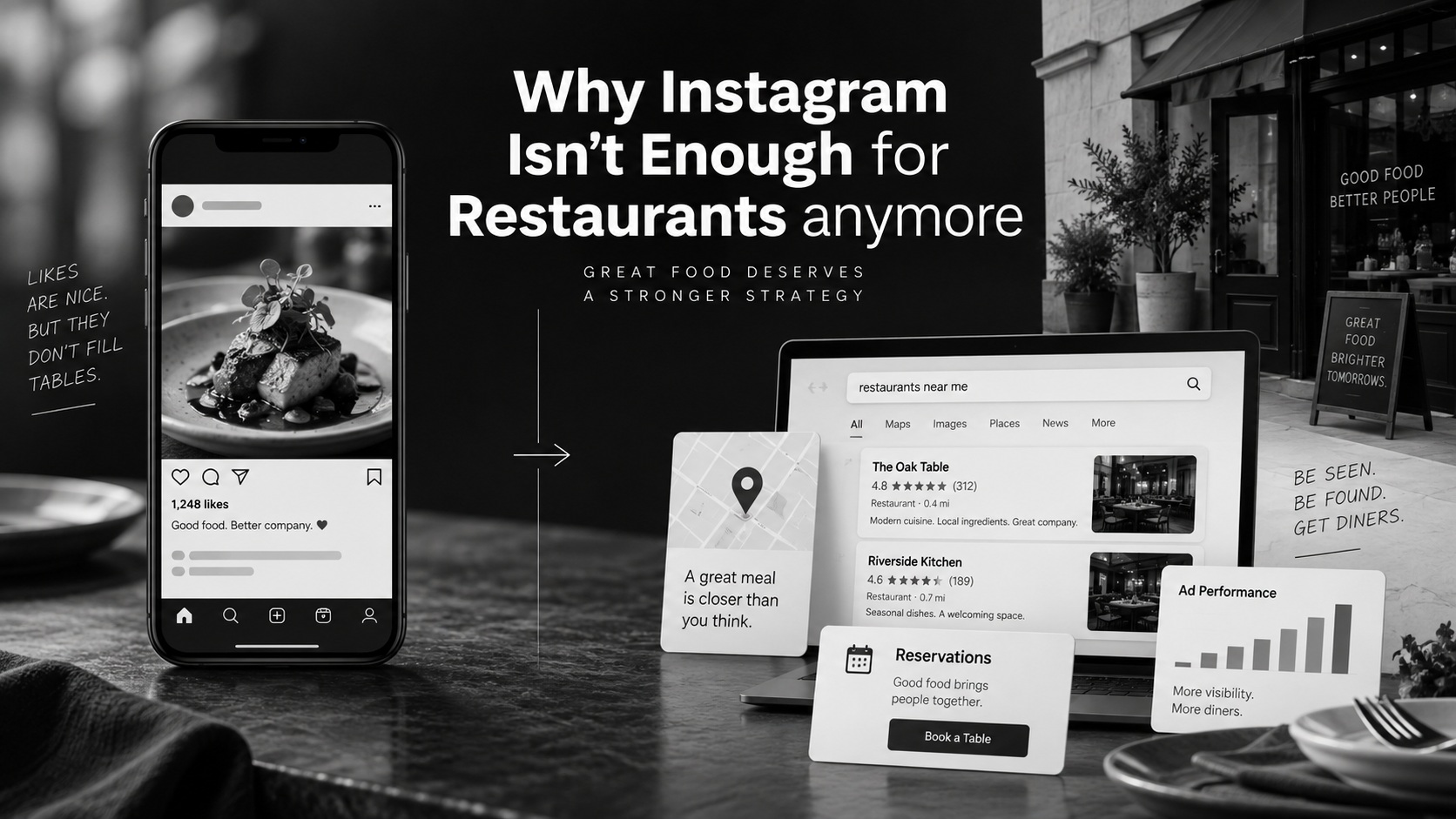
Local SEO helps restaurants appear prominently in Google searches when potential diners search for nearby places to eat, directly converting online visibility into reservations and foot traffic. Optimizing your Google Business Profile, managing customer reviews, building local citations, and implementing location-based keywords ensures your restaurant shows up when hungry customers are actively looking for dining options in your area. This strategic approach to search visibility turns local intent into filled tables by connecting your restaurant with customers at the exact moment they're deciding where to eat. For a deeper dive on seo for restaurants, see our latest analysis: SEO for Restaurants: Local SEO Strategies That Drive Bookings. For a deeper dive on restaurant local seo, see our latest analysis: Restaurant Local SEO: Proven Strategies to Boost Visibility in 2026. For a deeper dive on best local seo services for restaurants, see our latest analysis: Best Local SEO Services for Restaurants in 2026: Full Guide. For a deeper dive on local restaurant advertising, see our latest analysis: Local Restaurant Advertising: Proven Local SEO Strategies for 2026.
Why local seo for restaurants Matters in 2026
Local SEO for restaurants matters in 2026 because 78% of local mobile searches result in offline purchases, making it the most direct path from online discovery to filled tables. When potential diners search for "pizza near me" or "best brunch spot," they're not browsing casually—they're hungry and ready to make a decision within minutes.
Mobile-first behavior has fundamentally changed how restaurants acquire customers. According to Google, 50% of mobile users visit local stores within one day of a local search, and for restaurants, that window is often measured in hours rather than days. Diners searching on smartphones expect immediate answers: location, hours, menu highlights, and recent reviews all visible before they choose where to eat.
Voice search and AI assistants now play an increasingly influential role in dining decisions. When someone asks their device to recommend nearby Italian restaurants, algorithms prioritize businesses with complete profiles, strong review signals, and accurate location data. Restaurants that haven't optimized these elements simply don't appear in the conversation.
The competitive stakes are clear: appearing in map packs and local search results directly determines which establishments capture ready-to-visit customers, while those absent from these placements watch potential diners walk through competitors' doors instead.
SEO Services: What Actually Works
The SEO services that actually work for restaurants focus on Google Business Profile optimization, consistent local citations, and authentic review generation rather than generic keyword stuffing. A complete and accurate Google Business Profile serves as the foundation, requiring high-quality photos of dishes and interiors, accurate operating hours, direct menu links, and regular posts about specials or events. According to Google, 76% of nearby smartphone searches result in a business visit within a day, making profile completeness critical for capturing hungry diners actively searching for nearby dining options.
Name, address, and phone number consistency across directories like Yelp, TripAdvisor, OpenTable, and local food blogs prevents confusion and strengthens search visibility. Discrepancies between listings can dilute ranking signals and frustrate potential customers who encounter outdated information.
Strategic placement of location-based keywords throughout website content, meta descriptions, and menu pages helps search engines understand geographic relevance without awkward repetition. Menu pages optimized with neighborhood references and cuisine-specific terms naturally attract searchers looking for particular dishes in specific areas. These foundational elements create sustainable visibility that drives foot traffic and reservations month after month.
Common SEO Services Mistakes to Avoid
The most common SEO mistakes restaurants make include neglecting their Google Business Profile after initial setup, buying fake reviews, and ignoring mobile optimization despite most searches happening on phones. These missteps directly undermine visibility at the exact moment potential diners are deciding where to eat.
Inconsistent business information across platforms creates confusion for search engines and customers alike. When hours, phone numbers, or addresses differ between Google, Yelp, Facebook, and the restaurant website, ranking algorithms struggle to determine which version is accurate. This inconsistency signals low trustworthiness and pushes listings down in local search results.
Ignoring negative reviews or responding defensively damages both reputation and search visibility. Review signals influence where restaurants appear in local pack results, and defensive or absent responses tell potential customers to look elsewhere. According to Search Engine Land, 78% of local mobile searches result in offline purchases, making every review interaction a critical conversion opportunity.
Many restaurants focus exclusively on their own website while neglecting third-party platforms where diners actually conduct research. Optimizing presence on review sites, delivery apps, and reservation platforms ensures visibility across the entire customer journey, not just on owned properties that receive a fraction of total search traffic.
local seo for restaurants Roadmap: Step by Step
A successful local SEO roadmap for restaurants starts with claiming your Google Business Profile and builds systematically toward complete local search dominance. The foundation begins with verification of that profile, followed by careful optimization of business categories, attributes, high-quality photos of dishes and ambiance, and regular posts about specials or events.
Building consistent citations across major directories and restaurant-specific platforms like Yelp, OpenTable, and TripAdvisor ensures search engines recognize the business accurately. Name, address, and phone number data must match exactly across every listing to avoid confusion and ranking penalties.
According to Semrush, voice search queries are 4.2x more likely to have local intent than text searches, making it essential to optimize for conversational phrases like "best Italian restaurant near me." A structured review generation system encourages satisfied diners to share feedback, while timely responses to all reviews—ideally within 24-48 hours—demonstrate active engagement and build trust.
Website optimization focuses on mobile experience, local keyword integration, and clear presentation of location details and menu information. Creating neighborhood guides, highlighting local ingredient partnerships, and sharing chef stories about regional suppliers adds authentic local content that resonates with both search algorithms and potential diners.
How Popnest Approaches local seo for restaurants
Popnest approaches local SEO for restaurants by combining technical optimization with reputation management and content strategies specifically designed for the food service industry. Given that 46% of all Google searches have local intent according to HubSpot, the focus begins with comprehensive Google Business Profile management that includes weekly posts highlighting menu specials, seasonal offerings, and behind-the-scenes content alongside regular photo updates of dishes and dining experiences.
Automated review monitoring systems track feedback across multiple platforms while response templates maintain authentic brand voice without sounding generic. Each review receives timely acknowledgment that reinforces the restaurant's personality and values.
Local link building extends beyond traditional directories through targeted outreach to food bloggers, local lifestyle publications, and partnerships with community events like farmers markets and charity fundraisers. These relationships generate relevant backlinks while building neighborhood presence.
Monthly reporting tracks local pack rankings for key search terms, review velocity compared to competitors, and shifts in visibility across different menu categories and location-based queries. This data informs ongoing optimization priorities and content calendar adjustments.
Resources for SEO Services
Essential resources for restaurant SEO services include Google Business Profile Help Center, local SEO tracking tools, and industry-specific guides that address unique dining industry challenges. The Google Business Profile dashboard provides direct insights into how diners discover a restaurant through search queries, photo views, and direction requests. According to Google, businesses with completed Google Business Profiles get 7x more clicks than those without, making profile optimization a critical starting point.
Citation management and rank tracking tools like BrightLocal, Moz Local, and Whitespark help monitor local search visibility across directories and identify inconsistencies that hurt rankings. These platforms track keyword positions in local pack results and provide competitive analysis for nearby restaurants.
Restaurant-specific review platforms deserve dedicated attention. Yelp, OpenTable, TripAdvisor, and Google Reviews each influence different customer segments and require active monitoring and response strategies. Many diners check multiple platforms before choosing where to eat.
Local SEO communities and forums such as the Local Search Forum and BrightLocal's blog offer updates on algorithm changes and best practices. Staying current with these resources helps restaurants adapt to evolving search behavior and platform requirements.
Frequently Asked Questions
Does local SEO work for restaurants?
Local SEO is highly effective for restaurants because dining decisions are inherently location-based and often made in the moment. According to Google, 76% of nearby smartphone searches result in a business visit within a day, demonstrating how proximity-driven searches directly translate to foot traffic. When potential diners search for "restaurants near me" or specific cuisine types, optimized profiles and local listings ensure visibility at the exact moment customers are ready to choose where to eat. This makes search optimization one of the most direct paths to filling tables and building a loyal customer base.
How long does it take to see results from restaurant SEO?
Restaurant search optimization typically shows initial improvements within two to three months, particularly in local map pack visibility and Google Business Profile performance. Profile optimization often delivers faster results than traditional organic ranking efforts, sometimes showing increased impressions and clicks within weeks. More substantial gains in organic search rankings and sustained traffic growth generally develop over six to twelve months as content, citations, and review signals strengthen. Timelines vary based on current online presence, competition density, and the consistency of optimization efforts across all local search factors.
What is the most important local SEO factor for restaurants?
Google Business Profile completeness stands as the most critical ranking factor, with complete profiles generating significantly more visibility than incomplete listings. Review quality and quantity directly influence local pack placement, as customer feedback signals trust and relevance to search algorithms. Proximity to the searcher's location and how well a restaurant's information matches the search query round out the essential ranking elements that determine which establishments appear in coveted map results.
How many reviews does a restaurant need for good local SEO?
There's no magic number, but quality and recency matter as much as quantity for local restaurant SEO. Rather than chasing a specific count, focus on building a steady stream of authentic reviews over time. According to Whitespark, reviews count for 16% of local pack ranking signals, so consistent new feedback signals to search engines that your restaurant remains active and trusted. A few recent, detailed reviews often outperform dozens of old, generic ones in both rankings and customer persuasion.
Should restaurants focus on SEO or paid ads?
Both channels serve complementary roles in a comprehensive marketing strategy. Local search optimization builds sustainable, long-term visibility that captures diners actively searching for nearby dining options, while paid advertising delivers immediate exposure for time-sensitive promotions, seasonal menus, or grand openings. Restaurants benefit most from combining both approaches: organic search presence establishes credibility and captures consistent demand, while targeted ads amplify specific campaigns and fill tables during slower periods. The ideal balance depends on current business goals, competitive pressure, and available budget.
Can I do restaurant SEO myself or do I need an agency?
Restaurant owners can manage basic tasks like updating their Google Business Profile with hours and menus, responding to customer reviews, and posting photos of dishes and events. However, technical elements such as schema markup implementation, local citation building across dozens of directories, competitive keyword research, and content strategy that targets neighborhood-specific search queries typically benefit from professional expertise. The decision often depends on available time, technical comfort level, and how competitive the local market is for restaurant searches.
How does voice search affect restaurant SEO?
Voice search is transforming how diners find places to eat, with queries like "restaurants near me" and "where can I get pizza tonight" becoming standard. According to Semrush, voice search queries are 4.2x more likely to have local intent than text searches, making optimization critical for restaurant visibility. Successful strategies focus on conversational, long-tail keywords and question-based content that mirrors natural speech patterns. Optimizing for featured snippets and ensuring accurate business information across platforms helps capture these voice-driven searches effectively.
Popnest Media helps restaurants improve their visibility in local search results and attract more nearby diners. Ready to fill more tables with customers actively searching for places to eat? Contact Popnest Media today to discuss a customized strategy that drives foot traffic and online orders to your restaurant.
Want this for your restaurant? Popnest is restaurant marketing run by people who have actually run restaurants. Our clients see results like 1,840 reservations driven and 5.1x return on ad spend. Programs start at $1,299/month, 6-month minimum.