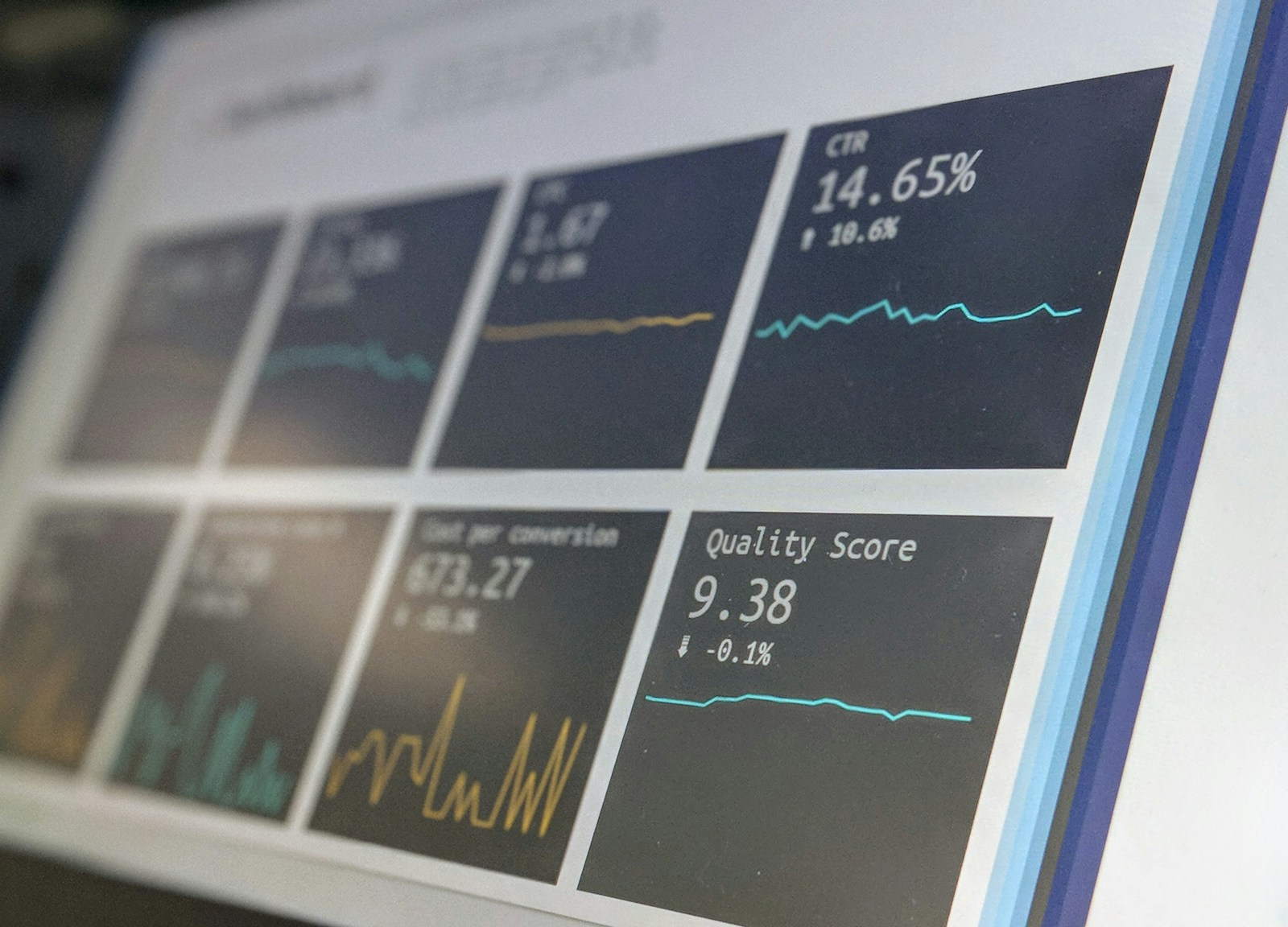
For a small business investing time and resources into Video Production, focusing solely on View Count is a dangerous mistake. Views are a “vanity metric”—they indicate reach, but not value. A truly successful video marketing strategy small business owners employ must connect video performance directly to business outcomes: leads, sales, and return on investment (ROI).
Mastering your Key Performance Indicators (KPIs) allows you to stop guessing which videos work and start optimizing your content for maximum conversions. This guide cuts through the noise to focus on the essential video metrics small business marketing teams must track.
I. The Video Metrics KPI Framework: Attention vs. Action
All effective video metrics fall into one of two categories, depending on your video’s goal:
| Category | Primary Goal | Key Metrics to Track |
| Attention (Engagement & Quality) | Measures content quality and audience interest. Goal: Keep them watching. | Audience Retention Rate, Average View Duration, Video Completion Rate. |
| Action (Conversion & ROI) | Measures effectiveness in driving desired business results. Goal: Get them to click/buy. | Click-Through Rate (CTR), Conversion Rate, Return on Investment (ROI). |
II. Attention Metrics: Are They Watching?
These metrics tell you if your Video Production quality, scripting, and topic are resonating with your target audience.
1. Audience Retention Rate (The Quality Indicator)
- What it is: A graph showing the percentage of viewers who are still watching at every second of your video.
- Why it matters: This is the single most important metric for platforms like YouTube and Facebook. High retention signals high-quality content, leading to higher algorithmic distribution.
- Actionable Insight: Look for sudden drop-off points. If 50% of viewers leave at the 0:15 mark, your introduction or “hook” is too weak and needs to be tightened (Source 1.1).
2. Average View Duration (The Content Length Indicator)
- What it is: The average time viewers spend watching your video.
- Why it matters: It helps you optimize video length. If your 10-minute videos average 3 minutes of watch time, you may be better off creating shorter, more concise 5-minute videos (Source 1.2).
- Target Benchmarks: Aim for 60-70% retention on short explainer videos and 40-50% on longer educational content (Source 1.1).
3. Video Completion Rate (The End Goal Indicator)
- What it is: The percentage of viewers who watched the entire video from start to finish.
- Why it matters: Crucial if your Call-to-Action (CTA) or special offer is placed at the end of the video. A low completion rate means your CTA is rarely seen.
- Tip: Long-form videos usually aim for 35-50% completion, while short-form videos (like Social Media Reels) should aim for 60-90% (Source 1.2).
III. Action Metrics: Are They Converting?
These metrics are essential for measuring the financial success of your video marketing efforts.
4. Click-Through Rate (CTR) (The Offer Interest Indicator)
- Formula: $\frac{\text{Clicks}}{\text{Views}} \times 100$
- What it is: The percentage of viewers who clicked the link or CTA in the video (or description) to go to your website or landing page (Source 2.1).
- Why it matters: It proves that your video’s message and verbal CTA are compelling enough to drive traffic.
- Actionable Insight: If your CTR is low but your retention is high, your content is good, but your Call-to-Action is weak or poorly placed. Try moving the CTA earlier or making it more visually obvious (Source 1.4).
5. Conversion Rate (The Sales Impact Indicator)
- What it is: The percentage of viewers who took the desired action after watching your video (e.g., signed up for an email list, filled a form, made a purchase) (Source 2.1).
- Why it matters: This is the most important metric for lead generation and e-commerce. It directly links video consumption to sales activity, proving ROI.
- Tracking Tip: This requires proper setup with tools like Google Analytics, UTM parameters, and CRM integration to track the user journey from video view to conversion (Source 1.1, 2.7).
6. Return on Investment (ROI) (The Bottom Line)
- Formula: $\frac{\text{Revenue Generated} – \text{Total Video Costs}}{\text{Total Video Costs}} \times 100$
- What it is: The total revenue directly attributable to your video campaign compared to the total cost (production, promotion, ads) (Source 3.2).
- Why it matters: It determines if your Video Production investment is profitable. If a video campaign has a positive ROI, you should allocate more budget toward similar content. If it’s negative, the strategy needs an overhaul (Source 3.2).
IV. The Popnest Media Advantage: Data-Driven Video Success
At Popnest Media, we don’t just make stunning Video Production content; we build conversion engines. We believe in defining clear, measurable KPIs before the first frame is shot, ensuring every video serves a direct business goal.
At Popnest Media, we are the experts in high-ROI digital marketing and conversion strategy.
We integrate advanced tracking and analytics for every piece of content, ensuring that your local business in Montreal, QC, Canada understands exactly which video metrics small business marketing success depends on. We guarantee your Video Production budget is an investment, not an expense.
Popnest Media specializes in growing local businesses near you through Conversion-Focused Website Design, expert Video Production, strategic Social Media Management (SMM) services, and high-performance Meta Ads (PPC). We build your digital authority using expert SEO techniques, all centered on maximizing Reputation Management and boosting customer lifetime value in the Montreal, QC, Canada area.
Related Reads on Popnest Media
- Building a YouTube Audience for Your Business: Beyond the Views
- Writing Effective YouTube Video Descriptions: The SEO Powerhouse
- Hosting Webinars to Grow Your Business: The 4-Stage Conversion Funnel
- Case Studies: https://popnestmedia.io/case-studies/
- Client Portfolio: https://popnestmedia.io/client-portfolio/
Frequently Asked Questions (FAQs)
Q: Why is View Count considered a “vanity metric” for small businesses?
A: While view count shows your reach, it doesn’t indicate if the viewer watched the content, paid attention, or took any action. A video with 10,000 views and 0 conversions is a poor ROI, whereas a highly targeted video with 500 views and 20 conversions is a massive success.
Q: What is a good Click-Through Rate (CTR) for a video?
A: CTR varies widely by platform and industry. On YouTube, a CTR between 2% and 10% is generally considered good. For embedded videos on a high-intent landing page, you should aim for a much higher CTR, often 20% or more, because the audience is already highly qualified.
Q: How can I track the Conversion Rate from a YouTube video?
A: You need to use unique UTM tracking parameters on every link you place in the video’s description. When a user clicks that link and then converts on your website (e.g., signs up or buys a product), Google Analytics will attribute the conversion back to the specific YouTube video source and link.
Q: How can I use the Audience Retention graph to improve my next video?
A: The retention graph is your editing blueprint. If you see a major drop-off point, analyze the video moment-by-moment at that timestamp. Did you drone on, change topics, or use confusing graphics? Eliminate or condense that section in your next video’s script to keep the audience hooked longer.
Book Your Free Discovery Call Today!
Ready to stop tracking views and start tracking revenue? Let Popnest Media apply a data-driven video metrics small business marketing strategy to your content. Contact PopNest Media today at +1 213-800-9518, email us at contact@popnestmedia.io to schedule your consultation.